A Guide to Grains & Flours
In recent years of our health journey, we’ve learned a lot about flours and grains. More recently, we started paying closer attention to the differences between ancient grains, whole grains, and enriched flours—and how those differences affect not only baking, but how we actually feel after eating them.
Obviously grains themselves aren’t new. They’ve been a staple in human diets for thousands of years. What has changed over time is how they’re processed—and how many options there are on the grocery store shelves. Standing in the flour aisle, it’s easy to feel unsure about what to choose.
Because flour is a common ingredient in baking and cooking, quality makes a big difference—not only in taste and texture, but also in digestion. For example, many people notice that pasta or bread in Italy can be enjoyed without feeling bloated—this is due to the quality of the grains used, simpler ingredients, and different milling practices.
In this guide we’ll cover the main types of grains and flours, common flour labels and what they mean, and how to make smart choices at the store.
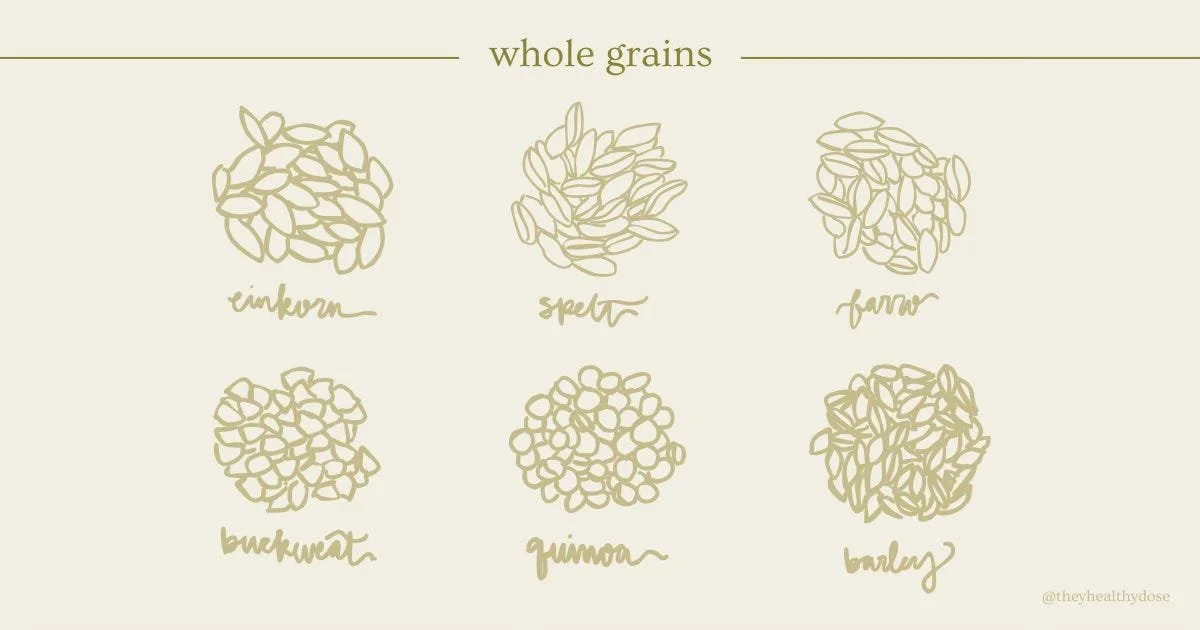
TYPES OF GRAINS | A SIMPLE BREAKDOWN
Ancient grains are grains that have remained largely unchanged for thousands of years. They’re whole grains and often contain more fiber, protein, and other naturally occurring nutrients than modern refined flours. Because of this, many people find ancient grains easier to digest and more stabilizing for blood sugar—especially when compared to refined modern flours. Examples of ancient grains include einkorn, spelt, farro, millet, buckwheat, quinoa, amaranth, and barley.
Whole grains include any grain that keeps its bran, germ, and endosperm intact, unlike refined grains. While all ancient grains are whole grains, not all whole grains are ancient grains. Whole grains are still a better option than refined grains because they retain fiber and other nutrients that support digestion. Examples of whole grains include oats, brown rice, whole wheat, rye, and wild rice.
Refined grains have had the bran and germ removed during processing, leaving mostly starch. This strips away fiber and nutrients, which are then added back synthetically to “enrich” the flour. Because refined grains lack fiber and protein, they act similar to sugar in the body and can contribute to rapid blood sugar spikes.
—
COMMON FLOUR LABELS | WHAT THEY MEAN
Organic: Made from grains grown without synthetic pesticides or chemical treatments. Organic flours also tend to avoid glyphosate exposure, which some people are sensitive to. Organic doesn’t mean perfect, but it is a more natural growing process.
Refined vs Whole Wheat: Refined (white) flour removes the bran and germ, leaving only the starchy endosperm. Whole wheat flour is milled from the entire grain, making it rich in fiber, proteins, vitamins, and minerals.
Enriched vs Unenriched: Enriched flour has synthetic vitamins and minerals added after processing, such as thiamine, riboflavin, niacin, folic acid, iron, and B vitamins. Unenriched flour does not.
Bleached vs Unbleached: Bleached flour is chemically treated to achieve a whiter color and softer texture. Unbleached flour naturally lightens over time without chemical processing.
—
HOW TO CHOOSE FLOUR
With all of this information, it can feel tricky to know where to start. The simplest approach is to focus on whole ingredients first, rather than perfection. Start by looking for flours with one ingredient listed (for example: “organic wheat flour”). Choose unenriched and unbleached when possible, then upgrade gradually based on what fits your budget and lifestyle. There will always be new terms and opinions — instead of chasing perfection, focus on what feels best for you. Our everyday staples include King Arthur and Good & Gather Organic flour.
—
SHOPPING FOR FLOUR
If you’ve ever stood in the flour aisle knowing what’s “better,” but still unsure what to actually buy, you’re not alone. Labels can be helpful—but they can also be confusing.
Rather than looking for the perfect flour, we follow a few simple guidelines that make shopping feel easier. This approach has helped us to make better choices without overthinking every purchase.
Upgrade Slowly
As you run out of a flour, replace it with a slightly better option rather than buying the same brand out of habit. When you’re starting out, focus on the basics:
Look for flours with one ingredient listed
Choose unenriched and unbleached when possible
From there, upgrade to organic if it fits your budget
There will always be “better” options out there. The goal isn’t perfection—it’s steady improvement that feels realistic.
—
Flours We Buy
Most of our everyday cooking and baking still relies on all-purpose flour, and for things like bagels and bread, we use bread flour. These flours are reliable, versatile, and work best for the majority of recipes.
We use ancient grains for specific recipes or when we want variety or added nutrition:
Einkorn flour behaves differently than modern wheat—it absorbs liquid quickly, so it’s not a 1:1 swap for most recipes. We use it occasionally, primarily when nutrition is the priority.
Buckwheat flour is our go-to for making our homemade cheese crackers. We’ll be sharing that cracker recipe soon!
Spelt flour is one we sometimes use in cookies, especially when we want a richer flavor without changing the texture too much.
—
Flours We Keep on Hand
Everyday Staples
Ancient Grains
Choosing better flour doesn’t have to be all-or-nothing. Start where you are, use what you have, and make upgrades as it makes sense for you.
Confidence in the grocery store comes from familiarity—not perfection—and that builds over time.
Cheers to healthy living!
xx
Victoria and Eric
A note: some links in this post are affiliate links. this never influences what we recommend — we only share products we genuinely use or brands we trust.
